
Through a Child’s Eyes: What If They’re Not Acting Out But Learning?
Written by Gregoria Arreola-Meza, MS, LCMHCA, LPSC, NCC
Psychotherapist
Recall a time when you were expected to know how to do something without any prior knowledge. How did you feel? You may have felt confused, frustrated, or even hurt by the implication that you should have known something you didn’t. In my work with children in therapy, I continually challenge myself to understand that a child's approach to a situation is shaped by the skills they possess at that time. As adults, we may unconsciously label children's behaviors that do not align with our expectations as attention-seeking, mischievous, or overreacting to situations.
We might think to ourselves, "Why would you think that was a good idea?" To challenge this perspective, I’d like to share an anonymous quote I once stumbled upon: "The sooner we let go of the expectation that children are capable of adult-like behavior, the easier it will be to tolerate their mistakes." I recognize how difficult it can be to understand why children do not always consider consequences before acting on their emotions. I invite you to reflect on the times when we, as adults, have struggled with this ourselves. It can indeed be challenging.
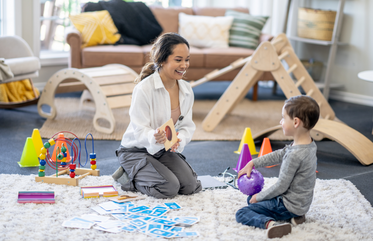
By removing the adult lens, we may realize that children are not seeking attention, but rather connection. They may not intend to be mischievous; instead, they might simply be struggling to use conflict-resolution skills they have never been taught. Additionally, what we perceive as overreactions may simply reflect a child’s current level of understanding. It would be unfair to expect someone to know something they are not familiar with.
Through my work, I have learned that when a child shares their experiences with me, it is their way of expressing "I promise I am trying my best… with what I know.” By approaching their stories with curiosity, non-judgment, and empathy, I am able to create a space where trust and learning can begin. This may involve helping children identify positive versus negative choices, distinguish a positive consequence from a negative one, and express which emotions may arise when deciding one over the other. By striving to view a child's story through their eyes, I come to understand behavior as a cue for growing and learning rather than as attention-seeking, mischief, or an overreaction.
How would you navigate a world that expects you to know it all if you never had a chance to learn it?

Author Gregoria Arreola-Meza, MS, LCMHCA, LPSC, NCC is a bilingual (English and Spanish) Licensed Clinical Mental Health Counselor Associate and Licensed Professional School Counselor in North Carolina who works with children, adolescents, and adults, providing empathetic support that helps clients build healthy coping skills and expressive outlets while honoring each person’s story, identities, cultural background, values, and lived experiences.
