
What is Play Therapy and How Does it Help Children?
Written by Kenzie Cameron, MSW, LCSW
Licensed Psychotherapist
So, what exactly is play therapy?
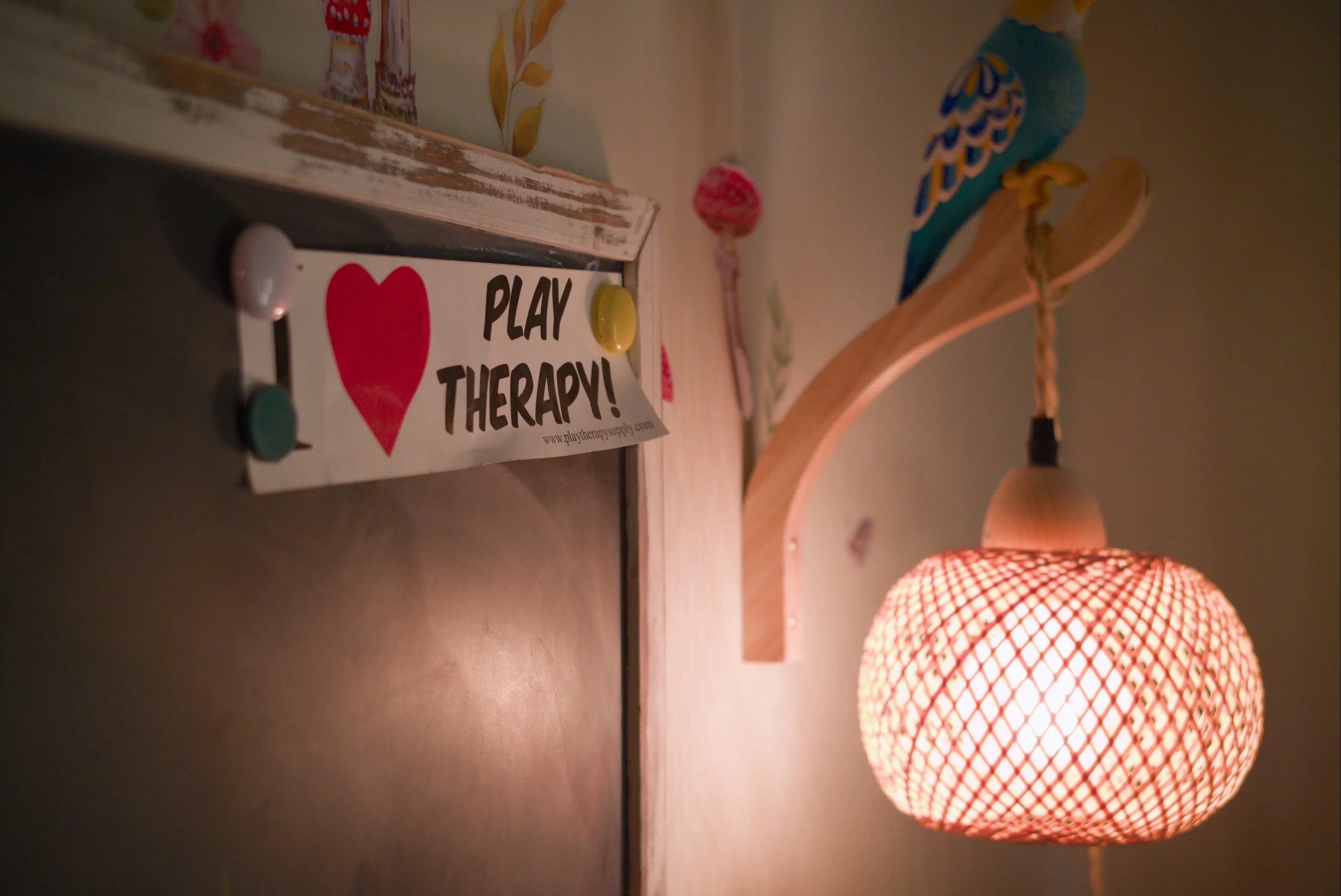
Play therapy is a type of therapy designed for children that is exactly what it sounds like: centered around play! Children often do not yet have the developmental ability to express their thoughts, feelings, and experiences in the same way adults can, which is typically through words. Play therapists utilize various methods of play to assist children in processing their lived experiences and emotions, while helping them also develop resiliency and coping skills to manage the behaviors that may result from those experiences and emotions. Play therapy can take many forms, depending on the individual child and the theoretical preferences of the therapist. If you take a peek inside of a play therapy room, you will often find puppets, dolls, doll houses, board games, playdough, various arts supplies, play kitchens, miniature figures, play medical equipment, play weapons, dress up materials, and more! All of these toys serve as objects that children can place their emotions onto and process them through playing. For example, a child whose parents are going through a divorce, may separate the family living in the doll house, or a child who is struggling with anger may use a lion puppet to communicate how their anger feels.
What can play therapy be used for?
Play therapy can be used to help children process a variety of things. Some of the most common reasons children are seen for are emotional regulation trouble, anger management, anxiety, starting a new school, bullying, moving, family changes such as divorce, marriage, or welcoming a new sibling, grief or loss, or witnessing trauma. Ultimately, you as the parent know your child best. There is never a problem too big or too small for therapy!
What to expect during my child's play therapy sessions?
Your child’s first play therapy session will actually probably not involve much play! Typically, the first session involves you and your child meeting with the therapist and discussing what has been going on that brought you to see them. The therapist will likely want to hear both you and your child’s perspective on the presenting problems. After that, the goal is for the child and therapist to have sessions independently, while the parent waits in the waiting area. This is not because we do not trust you to be in the room or because we think you are doing something wrong! This simply allows children the freedom to express themselves openly without worrying about how their thoughts or feelings may affect the people they love.
If you ask your child what they talked about in session, they may not say something you expect someone to say after therapy! They may simply say “we played uno!” or “We played with dolls!" However, I can assure you that your play therapist is not perceiving their session as just play time. While an adult might go to therapy and share how they felt sad and hurt by a friend not inviting them to a party, a child may play “school” with dolls and play out the scene with toys.
Final thoughts
Play is the natural language of children. Children are incredibly resilient and often approach the world with a sense of curiosity, imagination, and openness. When their imagination and play are met with unconditional positive regard and reflection, they are often able to resolve their own difficulties with very little help. If you feel your child is struggling, reach out to a play therapist! You may be surprised by how powerful play can be in helping children process difficult experiences, build coping skills, and move toward greater emotional wellbeing.

Kenzie Cameron is a Licensed Clinical Social Worker who supports children (5+), young adults, and those navigating reproductive mental health. She is committed to inclusive, affirming care and creates a warm, supportive space where clients feel safe to be themselves.
Kenzie believes clients are the experts of their own lives and works to empower them with confidence and self-compassion.